CEREES Book Discussion
From the Russian Empire to the Greek Coast:
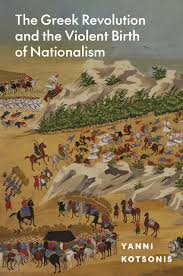
A Discussion of Yanni Kotsonis, The Greek Revolution and the Violent Birth of Nationalism (Princeton, 2025)
Where: Queen Mary University of London
When: Monday 5 October • 6 PM – 8 PM
Register here!
Overview
Join us in person to discuss Yanni Kotsonis’ latest bookThe Greek Revolution and the Violent Birth of Nationalism (Princeton University Press), which highlights how major empires—including the Russian Empire—shaped the conflict and how the conflict helped shape the region.
In 1821, a diverse territory in the southern Balkans on the fringe of the Ottoman Empire was thrust into a decade of astounding mass violence. The Greek Revolution and the Violent Birth of Nationalism traces how something new emerged from an imperial mosaic of myriad languages, religions, cultures, and localisms—the world’s first ethnic nation-state, one that was born from the destruction and the creation of whole peoples, and which set the stage for the modern age of nationalism that was to come.
Yanni Kotsonis exposes the everyday chaos and brutality in the Balkan peninsula as the Ottoman regime unraveled. He follows the future Greeks on the seaways to Odesa, Alexandria, Livorno, and the Caribbean, and recovers the stories of peasants, merchants, warriors, aristocrats, and intellectuals who navigated the great empires that crisscrossed the region. Kotsonis recounts the experiences of the villagers and sailors who joined the armed battalions of the Napoleonic Wars and learned a new kind of warfare and a new practice of mass mobilization, lessons that served them well during the revolutionary decade. He describes how, as the bloody 1820s came to a close, the region’s Muslims were no more and Greece was an Orthodox Christian nation united by a shared language and a claim to an ancient past.
This panoramic book shows how the Greek Revolution was a demographic upheaval more consequential than the overthrow of a ruler. Drawing on Ottoman sources together with archival evidence from Greece, Britain, France, Russia, and Switzerland, the book reframes the birth of modern Greece within the imperial history of the global nineteenth century.
Confirmed discussion panel:
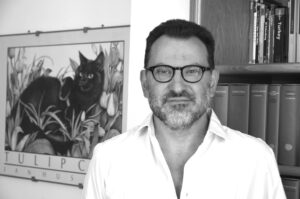
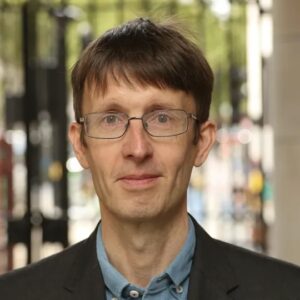
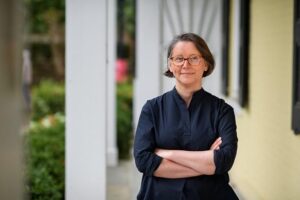
- Yanni Kotsonis (NYU)
- Maurizio Isabella (QMUL)
- Stephen Lovell (KCL)
- Ceyda Karamursel (SOAS)
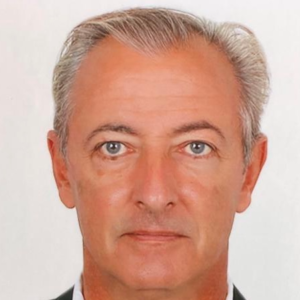
Yanni Kotsonis Raised in Athens and educated in Montreal, Copenhagen, London, New York, and Moscow, he teaches on Russia, the global political economy, and dystopianism. His books and articles concern Russian political economy, taxation, and modern Greece. He is best known for his work in political economy, the history of statecraft, and macro-historical connections spanning Russia, Europe, and the Mediterranean. He is the founding director of the Jordan Center for the Advanced Study of Russia and father to three children.