Teaching
The displays and exhibitions supported by the project likewise had an important educational facet. The Reunited exhibition at the National Library of Wales saw 16 visits of primary and secondary school classes, with each each visit consisting of a workshop in the Education Room (with access to original materials), as well as a gallery visit and tour of the storage areas. The Secrets of the Thames exhibition was visited by school groups of different levels, as well as students on an undergraduate module on premodern London.
The new technologies employed by team members and the link between the humanities and the sciences underpinning the project as a whole have the potential to transform teaching in both fields and reassess the boundaries between the disciplines. This has been explored by Prof. Eyal Poleg in a variety of settings.
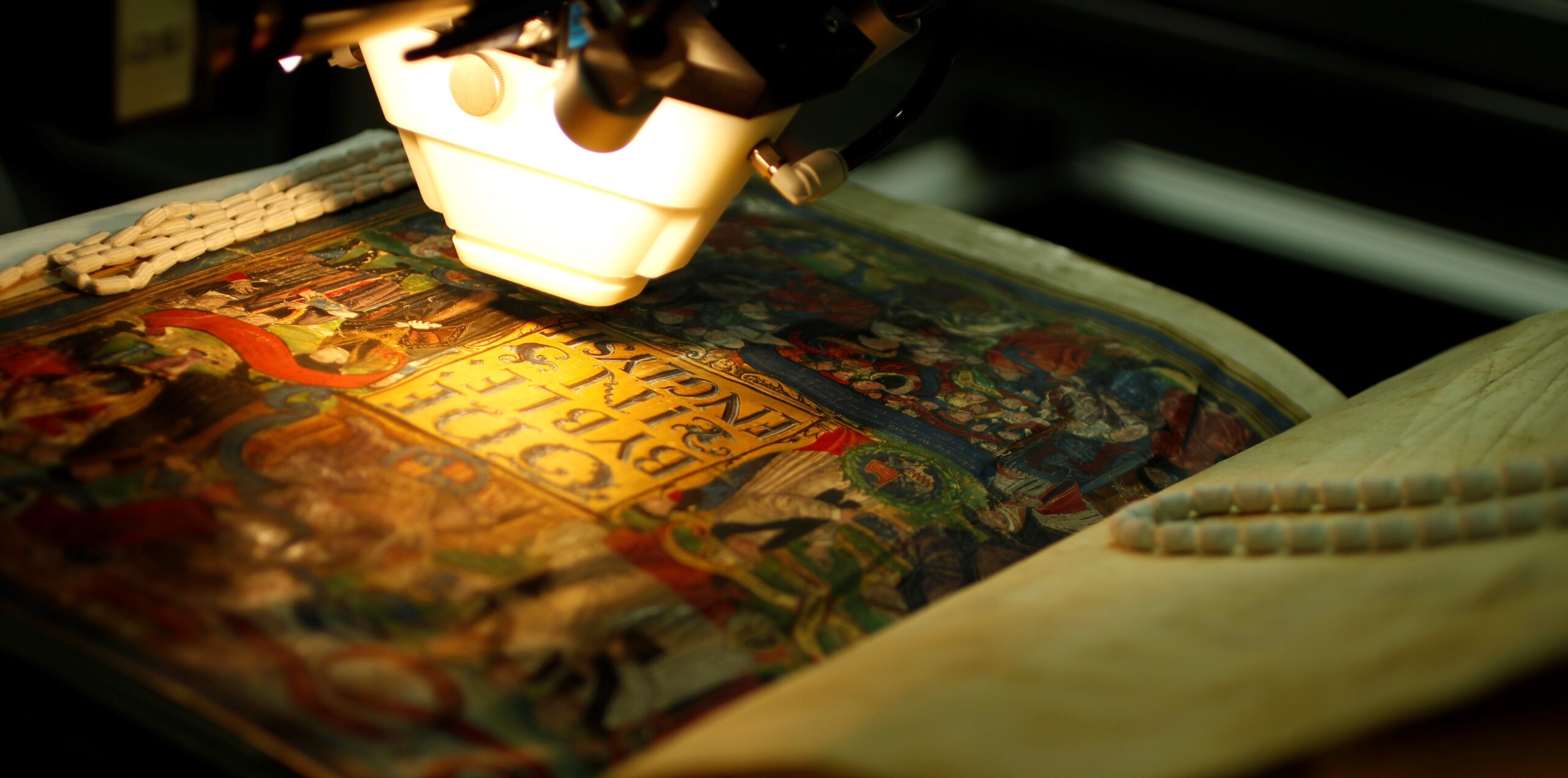
Presentations to primary and secondary schools tied in with key themes (e.g. Tudor Portraits; State and Religion) while at the same time merging STEM and SHAPE enquiries. School children and young adults were captivated by the new technologies and the information it reveals on historical artefacts.
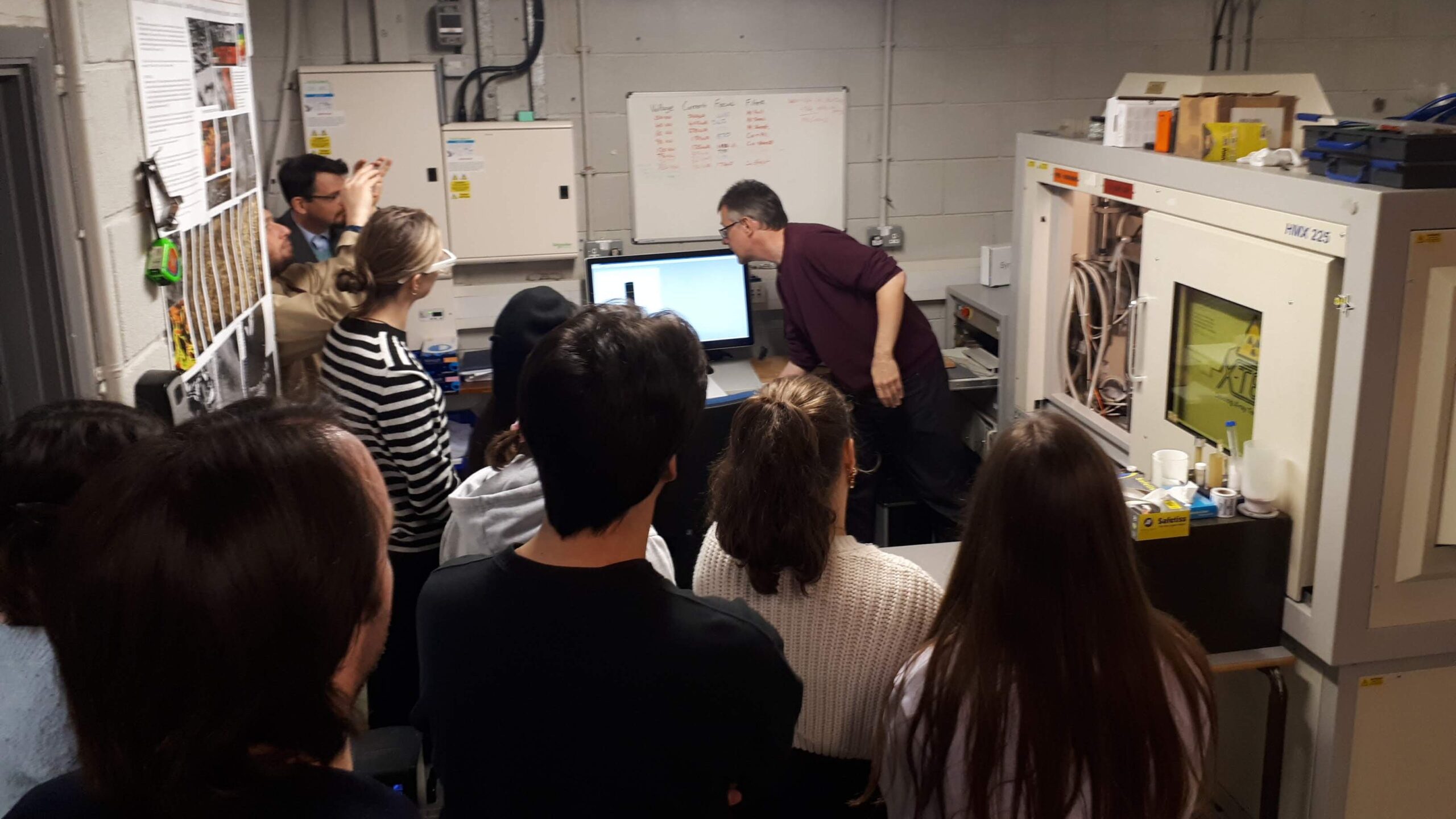
At Queen Mary University of London a specialised third-year undergraduate module on premodern material history, as well as a graduate unit, provided students with an overview of new technologies, and their practical use in historical research. In museum and lab visits, students witnessed first-hand the use of innovative technologies, their potential and limitations. Thus, for example, the students witnessed Dr David Mills scanning wooden fragments from the binding recovered from the Thames foreshore using a Micro-CT scanner.
Hands:On is an annual Hackathon run collaboratively between Queen Mary University of London and Cambridge University Library. This innovative training programme equips students with a range of skills for working in digital and collaborative environments. The week-long programme brings together students from a range of international institutions to work with developers and curators. Each year students are working to create innovative prototypes in support of a different project, from Hidden in Plain Sight or the Silk Roads exhibition at the British Museum to looking at palimpsests and colophons. As explored in the article New Technologies, Training Initiatives and the Future of Manuscript Studies, this constitutes an important stepping stone in transforming the way we teach manuscript studies in a new environment.