Talismans
The Hidden in Plain Sight project was designed to ensure that our work and methodologies would be deployed beyond the European evidence. This has led to work in the Himalayas, looking at prayer fabrics (Khata) and building capacity in the Kingdom of Bhutan. Funded by the London Arts and Humanities AHRC consortium (LaHP), Samaneh Sabzekar has embarked on a PhD project titled “Beyond Magic: Contextual and Material Study of Islamic Amulets“. A collaborative doctoral award between Queen Mary University of London and the Museum of Anthropology and Archaeology, Cambridge, the project explores the materiality and reception of talismanic use of Islamic Scriptures. With the support of LAHP, Samaneh undertook a there-month placement at the Science Museum, in which she explored and re-assessed their collection of Islamic amulets.
This page was written by Samaneh as a reflection on her placement at the Science Museum.
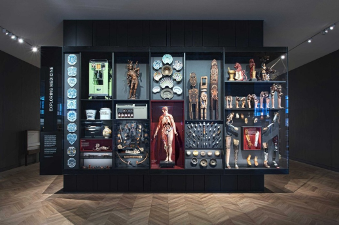
Among the objects in the Wellcome collection of London’s Science Museum, one immediately caught the eye. Sitting on display in Medicine: The Wellcome Galleries is a brass bowl unlike any other. Around its rim hang forty tiny metal keys. Its surface is covered with Arabic inscriptions, while twelve signs of the zodiac circle its exterior. At first glance it is simply a beautiful piece of Iranian metalwork. But look closer, and it reveals a history of illness, protection and healing.
Today, magical objects like this that are part of magical traditions are often regarded within Islamic societies as belonging to a superstitions past . Yet they reveal a rich history, offering a window into a world where faith, medicine and everyday life were closely connected, and where healing involved not only the body but also the unseen forces people believed shaped human life. So, what exactly is this bowl?
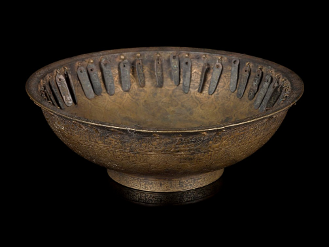
In Persian it is known as a ṭās-e chehel kelid, literally, a “Forty-Key Bowl.” Although museum records describe it as a divination bowl, historical evidence suggests that it was primarily used for healing and protection. Water was poured into the bowl until it covered the engraved inscriptions. The water was then drunk or gently poured over the person seeking healing. People believed that Qur’anic verses, prayers and sacred names engraved on the metal passed their blessing into the water. Rather than separating medicine from religion, many communities saw them as working together. Healing the body, seeking God’s protection and guarding against unseen causes of illness were all part of the same understanding of wellbeing.
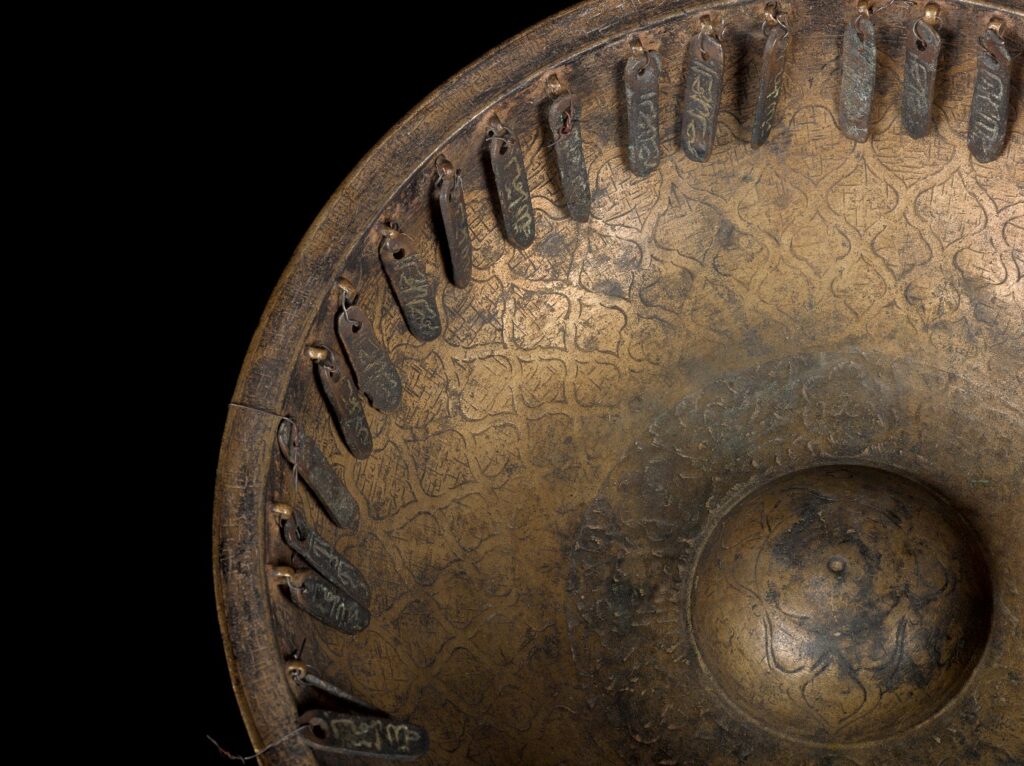
The bowl itself also tells another story. Although the Science Museum example has forty small keys attached individually around its rim, not every Forty-Key Bowl looked the same. Some surviving examples have all forty keys hanging together from a single wire or cord threaded through the edge of the vessel. These differences suggest that what mattered was not the exact design, but the symbolic presence of the forty keys themselves. A good example of this alternative form survives in the collections of the British Museum.
Perhaps surprisingly, bowls like this were still being used in parts of Iran well into the twentieth century. Historical accounts from north-eastern Iran, particularly the region of Khorasan, describe their use during childbirth, childhood illnesses and rituals intended to protect families from the evil eye, a belief, found across many cultures, that envy or jealousy could bring harm or misfortune.
The most important of these ceremonies took place forty days after childbirth, a period traditionally seen as one of recovery and vulnerability for both mother and baby. At the end of those forty days, water from a Forty-Key Bowl might be poured over the newborn as part of a blessing. Families who did not own such a bowl often recreated its symbolic power in other ways, for example, by dipping a wooden comb into water forty times before washing the baby. Different regions had different customs, but they all shared the same idea: that the number forty marked a moment of protection, renewal and a safe beginning to a new stage of life.
Why forty? Across Iranian culture, forty has long symbolised transition and completion. Protective rituals often involved waiting forty days, repeating an action forty times or using forty symbolic objects. Even today, traces of this belief survive in Persian expressions. One saying, chilleh dar kārash oftādeh (“a forty has fallen upon his work”), describes a situation in which someone’s affairs become unexpectedly difficult, as though an unseen obstacle has appeared.
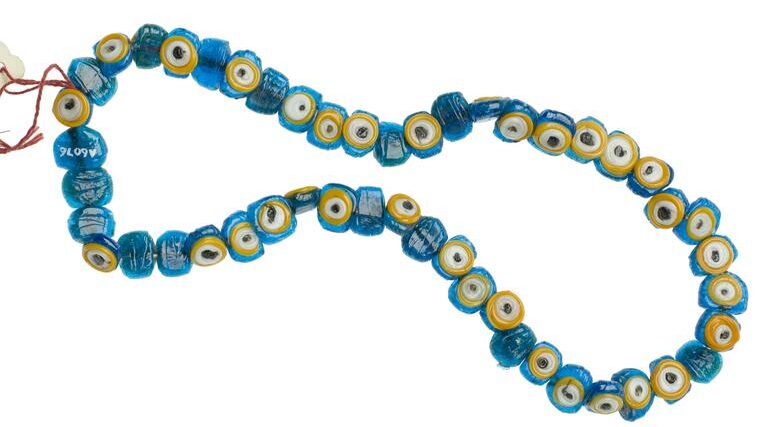
The symbolism of forty extended far beyond childbirth. In the city of Shiraz, a city in southern Iran, unmarried women poured water from a Forty-Key Bowl over their heads in the hope of improving their chances of marriage. Protective prayers such as Āyat al-Kursī, a well-known verse from the Qur’an believed to offer God’s protection, were recited to safeguard homes from harm. Children sometimes wore small amulets known as chehel bismillāh (“Forty Bismillāhs”), made from forty tiny metal discs engraved with the opening words of the Qur’an, as protection against illness and misfortune. Together, these customs show just how deeply the symbolism of forty shaped everyday religious life in Iran.
The importance of the “forty keys” even found its way into the landscape. An old public water cistern in Tehran’s historic bazaar was once known as the “Forty-Key Cistern.” Although we do not yet know exactly how it acquired this name, it hints that the symbolism of the forty keys was once widely recognised beyond healing rituals alone.
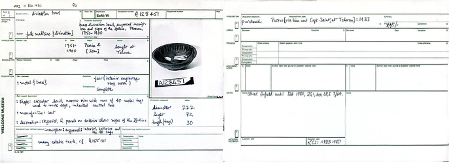
How did this bowl make its way to the Wellcome galleries? Museum records tell us that it was purchased in Tehran in 1933 by Peter Johnston-Saint, who collected objects on Wellcome’s behalf. The seller is listed only as “Putrus”, possibly the same Hirmiz Putrus who appears elsewhere in Wellcome’s archive in connection with Persian manuscripts. Much of the bowl’s earlier life, however, remains a mystery. We do not know who made it, who first owned it or how many families may have turned to it in moments of hope, illness or uncertainty.
The bowl is not simply a museum artefact. It reminds us that healing has never been only about medicine. For the people who used this bowl, recovery also involved prayer, ritual, memory and hope. Nearly a century after it entered the museum, it still invites us to think about how different cultures have sought comfort, protection and healing, and how objects can carry those stories across generations.